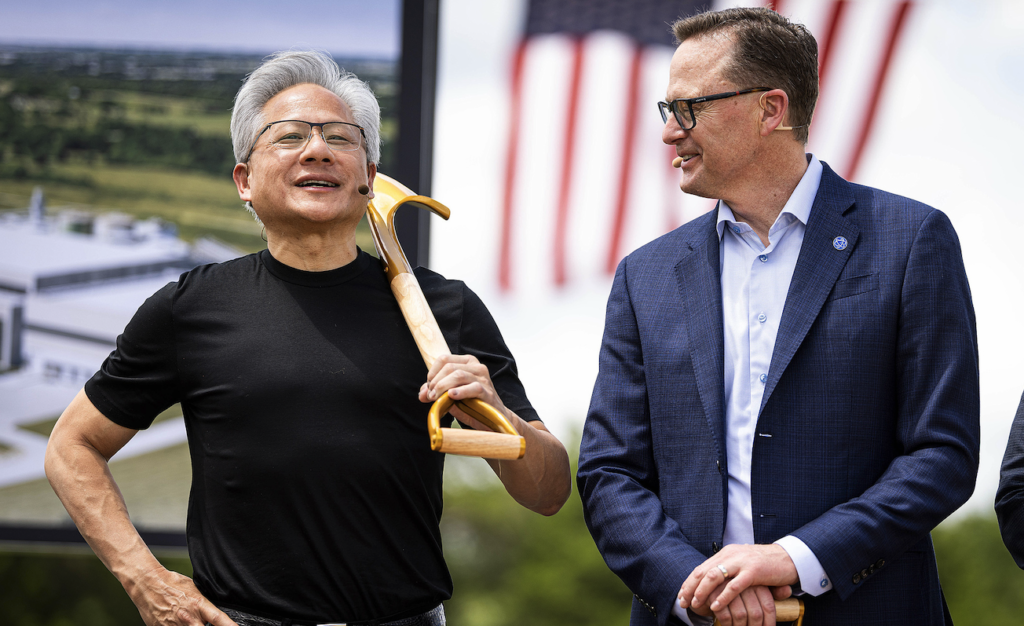
U.S. Treasury Secretary Scott Bessent stated that Federal Reserve rate cuts do not necessarily lead to a weaker dollar, and that a strong dollar is compatible with rate cuts, depending on the reasons behind the Fed’s decision to cut rates.
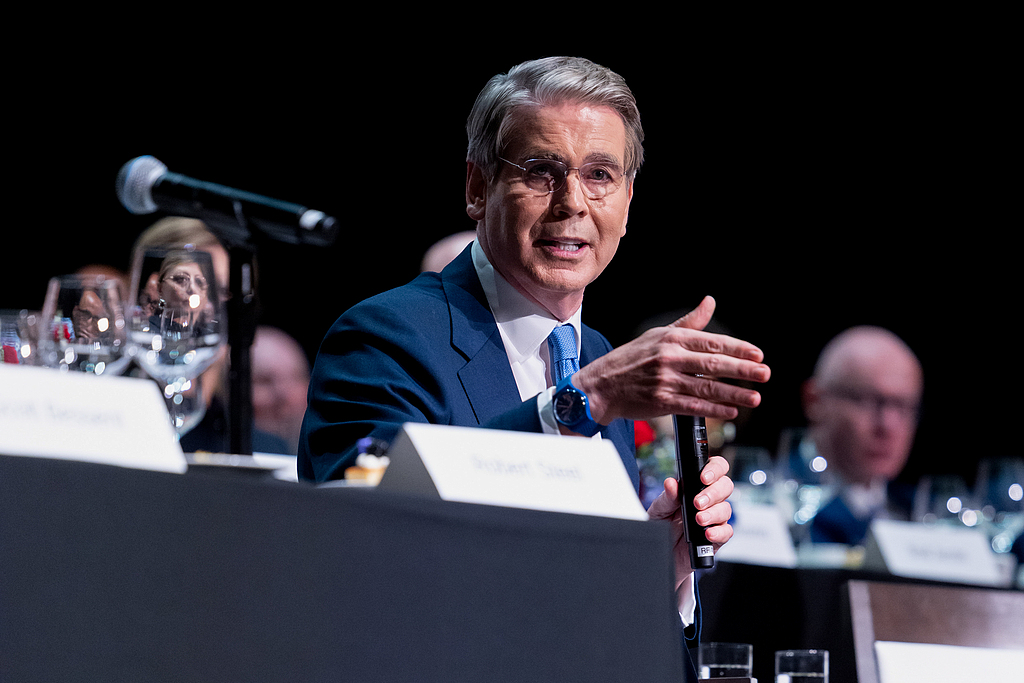
Bessent believes that artificial intelligence is expected to at least double productivity, emphasizing that AI will become a core driving force, and that current AI capital expenditure led by major cloud computing companies could reach approximately $750 billion.
June 25 News — On Wednesday local time, U.S. Treasury Secretary Scott Bessent stated that Federal Reserve rate cuts do not necessarily lead to a weaker dollar, and that a strong dollar is compatible with rate cuts.
Bessent pointed out that if the Fed cuts rates because inflation is falling while the economy remains strong, capital will continue to flow in and the dollar can remain stable. Of course, this depends entirely on the reasons for the Fed’s rate cuts.
In an interview that day, Bessent stated that the United States is expected to return to a 3% growth trajectory this year, that inflation will fall back to the Fed’s target level as the Iran conflict eases, and that artificial intelligence is expected to at least double productivity. He also defended the Iran agreement the administration is advancing and its handling of frozen assets.
The remarks came a day after Bessent delivered a speech at the New York Economic Club’s “America 250th Anniversary” dinner, proposing what he called a “five-point economic statecraft framework,” defined as using American economic power “in service of national sovereignty.”
Citing Hamilton’s view that a nation “should endeavor to possess within itself all the necessities of national supply,” he noted that decades of pursuing lowest cost have left the United States externally dependent in key areas: semiconductors, artificial intelligence, quantum computing, advanced manufacturing, shipbuilding, critical minerals, and pharmaceuticals.
In his view, supply chains should no longer be evaluated solely on cost, but also on whether they can continue operating during a crisis, whether they can withstand external threats, and whether they have resilience during pandemics or cyberattacks.
He also believes that rule-making for digital assets, stablecoins, and tokenized finance will determine the financial order of the next century, and that these rules should be led by Washington. On financial leadership, he stated that the dollar’s international status is “by no means accidental,” calling reserve currency status both an advantage and a responsibility to maintain system stability. The fifth principle is that economic dividends should benefit ordinary households, not just financial markets.
On Wednesday morning, Bessent further emphasized that artificial intelligence will become a core driving force. He stated that current AI capital expenditure led by major cloud computing companies could reach approximately $750 billion, which is expected to drive another doubling of productivity.
Regarding the Federal Reserve, Bessent expressed full confidence in Fed Chair Kevin Warsh and commended his approach of gradually weakening forward guidance and the “dot plot.” He said the president well understands that “the bond market topples more governments than howitzers,” and warned that if inflation remains elevated while the Fed responds slowly, the bond market will tighten financial conditions on its own.
On the Iran issue, Bessent stated that once Iran’s frozen assets are unfrozen under an interim agreement, the Treasury Department will oversee them, likely operating through an escrow account in Doha, and will redirect a “substantial portion” toward purchases of U.S. food and pharmaceuticals, including corn, wheat, soybeans and medicines.
Bessent believes that the dominance of the U.S. dollar is crucial. “Look, the new Venezuela… the dollar will be at the core of its trade… in the Iran negotiations, the Iranians will use dollar-denominated pricing. Everything we are doing is pushing the dollar back to its central position.”